Fix
Pellet grill not getting hot: causes and fixes
Published
Note: This page contains affiliate links. If you buy through them we may earn a commission at no extra cost to you. Learn more
In short
When a pellet grill will not reach temperature, the usual causes are damp or swollen pellets, an auger that is jammed or running low on pellets, ash filling the firepot, a dirty temperature probe giving false readings, or heat lost to cold wind and an open lid. Empty damp pellets, clean the firepot and chamber, wipe the probe, check the hopper and auger, and shelter the grill.
Products for this job
Compare all 5 productsTraeger Pro Series 22: 3,690 cm² barrel pellet grill
Check price on AmazonAffiliate linkPit Boss 10697 tabletop: 180 to 500 °F, slide-plate
Check price on AmazonAffiliate linkWeber Searwood: pellet grill with Weber Connect
Check price on AmazonAffiliate link
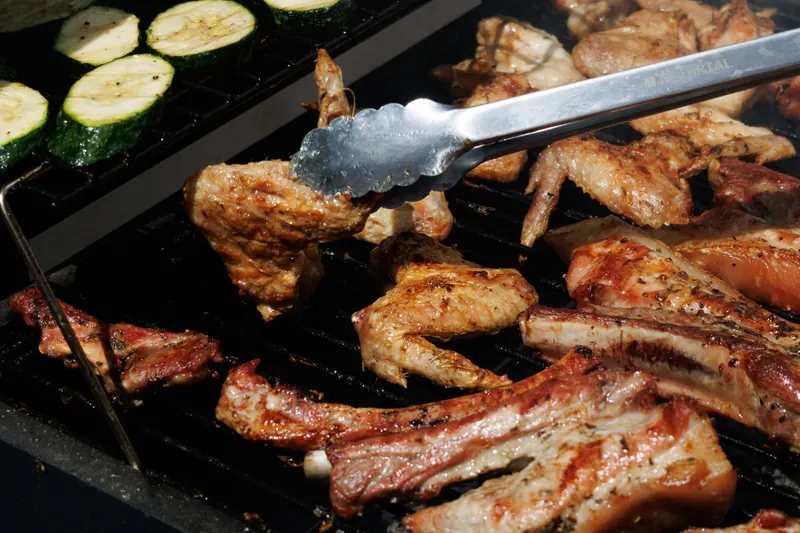
Pellet grills are meant to hold temperature on their own, so a grill that stalls at a low reading or swings up and down is frustrating. The causes are nearly always fuel, ash or the sensor, and most are fixable at home. This guide goes through the checks in order, from quickest to most involved. Error codes and part layouts vary by brand, so use your manual to identify parts and any code shown.
Check 1: pellets and the hopper
Damp pellets are the most common cause, especially in the UK. Moisture makes them swell and crumble into sawdust, which burns poorly and can clog the auger. If pellets in the hopper look dull, soft or broken, empty the hopper using the clean-out door if there is one, and refill from a dry, sealed bag.
Check the hopper level too. A low hopper can bridge, leaving a tunnel above the auger with no pellets falling in. Stir the pellets, top up, and keep the hopper lid closed in rain.
Check 2: firepot and ash
Ash builds up in the firepot and chamber with every cook. Too much ash smothers the fire, blocks the air holes and can stop the grill getting hot or lighting at all. Many makers advise vacuuming the firepot every few cooks.
- 1
Run the shutdown cycle, unplug the grill and let it cool completely.
- 2
Remove the grates, drip tray and heat baffle.
- 3
Vacuum ash from the firepot and the bottom of the chamber, ideally with an ash vacuum.
- 4
Check the firepot air holes are clear.
- 5
Refit the baffle, drip tray and grates in the positions the manual shows.
- 6
Prime the auger and restart as the manual describes.
Note:Always unplug the grill and let it cool before cleaning. Ash can hide embers for hours, so empty it only into a metal container when completely cold.
Check 3: auger and fan
If pellets are dry and the firepot is clean but the fire is small, the auger may not be feeding properly. Listen for the auger motor and look for pellets falling into the firepot. A jam is often caused by swollen pellets set hard in the auger tube after rain. Some manuals describe how to clear it; others advise contacting the maker's service team.
The fan supplies air to the fire. If you cannot hear it running, or the fire smoulders with lots of smoke and little heat, check the manual's troubleshooting section. Motors, fans and igniters are replaceable parts on most grills.
A useful test is to start the grill with the grates and baffle removed, as some manuals describe for diagnosis, and watch whether the igniter glows, the fan blows and pellets drop. Only do this as your manual allows and keep hands well clear of the firepot. Note what works and what does not before calling the maker, as it speeds up any support request.
Check 4: the temperature probe
The grill's probe, usually a metal rod inside the chamber, tells the controller how hot it is. If it is coated in grease and smoke, it can read wrongly, and the controller then under- or over-feeds pellets. With the grill cold, wipe the probe gently with a damp cloth and dry it.
Also remember that a lid thermometer or controller reading is not the grate temperature. A separate oven or grill thermometer at grate level helps you see whether the grill is really cool or the reading is off.
Check 5: weather and set-up
Wind and cold strip heat from a pellet grill's steel body, and on a cold British evening a light grill may struggle to reach high settings. Turn the grill so the wind does not blow across the lid seam or chimney, use a windbreak at a safe distance, and keep the lid closed. An insulated blanket made for your model helps in winter. Heavier, better-sealed grills cope better; compare weights in best pellet grills for UK gardens.
Also check the power supply: a long or unsuitable extension lead can affect some controllers. Follow the manual's advice on leads and sockets.
Frequently asked questions
Why does my pellet grill temperature swing up and down? Some swing is normal. Large swings point to damp pellets, a dirty probe, ash build-up or wind.
How often should I clean the firepot? Many makers suggest every few cooks, and before long smokes.
Can wet pellets damage the auger? Yes, swollen pellets can set hard and jam it. Keep pellets sealed and the hopper closed.
What if my grill shows an error code? Codes differ by brand. Look it up in the manual or the maker's support pages and follow their steps.
What you need
- Check price on AmazonAffiliate link
Traeger Pro Series 22: 3,690 cm² barrel pellet grill
- Check price on AmazonAffiliate link
Weber Smokey Mountain 14.5 in: compact bullet smoker