Fix
Gas BBQ not getting hot enough
Published
Note: This page contains affiliate links. If you buy through them we may earn a commission at no extra cost to you. Learn more
In short
A gas BBQ that will not get hot usually has one of five problems: a regulator that has limited the flow after a bottle change, butane struggling in cold weather, a nearly empty bottle, blocked venturi tubes or burner ports, or heat lost to wind and an open lid. Reset the regulator, use propane in cold weather, clean the burners and preheat with the lid closed for 15 minutes.
Products for this job
Compare all 6 productsWeber Spirit E-310: three burners, 2,326 cm² grill
Check price on AmazonAffiliate linkWeber Spirit E-425 Mix Griddle: four burners plus griddle
Check price on AmazonAffiliate linkNapoleon Freestyle 4: four burners, 13.6 kW
Check price on AmazonAffiliate link
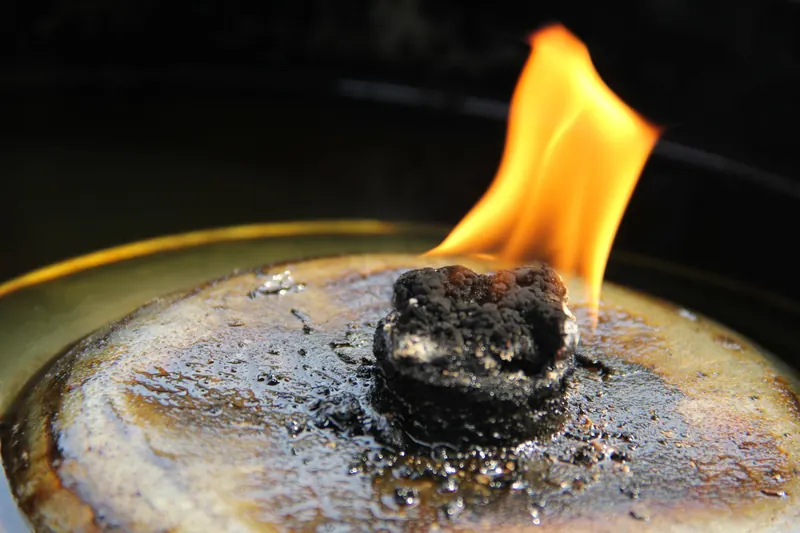
Most gas grills reach searing heat within 10 to 15 minutes with the lid down. If yours sits at a lukewarm temperature, or one side never gets hot, the cause is nearly always fixable at home. This guide works through the checks in order, from the free and quick to the parts you may need to replace. Follow your grill's manual for any model-specific steps.
Quick checks first
Before taking anything apart, rule out the simple causes. Most low-heat complaints end here.
- The bottle valve is fully open.
- The bottle is not nearly empty; lift it or use a gauge.
- The lid has been closed for at least 10 to 15 minutes of preheating.
- All burners are lit; look under the grates for a missing flame.
- The grill is not in a strong wind; move it or turn its back to the wind.
- The lid thermometer is working; it reads the dome, not the grate, so it can read lower than the cooking surface.
Regulator safety mode after a bottle change
If the problem started just after you changed the bottle, the regulator or hose safety device may have restricted the flow. This happens when the bottle valve is opened quickly or with a burner already on. The flame lights but stays low on every burner.
The usual reset is to turn all burners and the bottle off, disconnect the regulator, wait about a minute, reconnect, open the bottle slowly with the burners off and then relight. Our regulator problems guide explains this and other regulator faults.
Cold weather and the wrong gas
Butane, the gas in blue bottles, does not vaporise well near freezing. On a cold spring or autumn evening a butane grill can run weakly, and a long cook can chill the bottle further. Propane, in red bottles and green patio gas bottles, keeps working well below freezing, which is why it is the better choice for year-round grilling in the UK.
Changing gas type means changing the regulator to the right one for that gas, and some grills need different parts; check the manual and data plate. See what gas bottle you need for the options.
Propane
screw-on regulator
Typical sizes: 3.9, 5, 6, 13 and 19 kg
Butane
clip-on regulator
Typical sizes: 4.5, 7 and 15 kg
Patio gas (propane)
clip-on regulator
Typical sizes: 5 and 13 kg
Typical UK bottle colours and sizes; always fit the regulator made for your bottle and gas.
Blocked venturi tubes and burner ports
Each burner has a venturi tube where gas mixes with air. Spiders and insects like to nest in these tubes, especially over winter, and a web is enough to starve the burner. Signs are a weak, yellow, lazy flame, a burner that is low compared with the others, or flames coming from the control panel end. Burner ports can also clog with grease and rust.
With the gas off and the grill cold, remove the grates and flavouriser bars, run a venturi brush through each tube and brush the burner ports along their length. Our how to clean a gas BBQ guide has the full steps. Burners with rusted-through holes, or that are split or bent, should be replaced with the maker's parts.
Note:A flame burning at the control panel or under the grill instead of at the burner ports is dangerous: turn off at the bottle at once and do not use the grill until the cause is cleared. If in doubt, contact the maker or a qualified gas engineer.
When the grill itself is the problem
Some grills simply have limited power for their size. A compact one-burner grill of around 2 to 3 kW will never sear like a four-burner grill of 12 kW or more, especially in wind. Thin lids and stamped steel cookboxes lose heat faster than cast aluminium. If yours has never got hot, check the burner rating on the listing or data plate.
If you are replacing an under-powered grill, look at total kW against the cooking area and choose cast iron grates. Our best gas BBQs for UK gardens guide lists stated power for each model.
Frequently asked questions
Why is one side of my gas BBQ cooler than the other? One burner is likely blocked or worn. Clean its venturi tube and ports, and check the flame matches the others.
How hot should a gas BBQ get? Most family grills reach roughly 250 to 300 °C on the lid thermometer when preheated on high with the lid closed. Check your manual for its stated range.
Does a gas BBQ work in winter? Yes with propane, which vaporises well in the cold. Butane struggles near freezing.
Can a low flame be a gas leak? A leak can reduce flow. Check joints with soapy water, never a flame, and turn off at the bottle if you smell gas.
What you need
- Check price on AmazonAffiliate link
Weber Spirit E-310: three burners, 2,326 cm² grill
- Check price on AmazonAffiliate link
Weber Genesis II E-310 GBS: 3,456 cm² plus side burner